What I’m Carrying in My Camera Bag in 2026
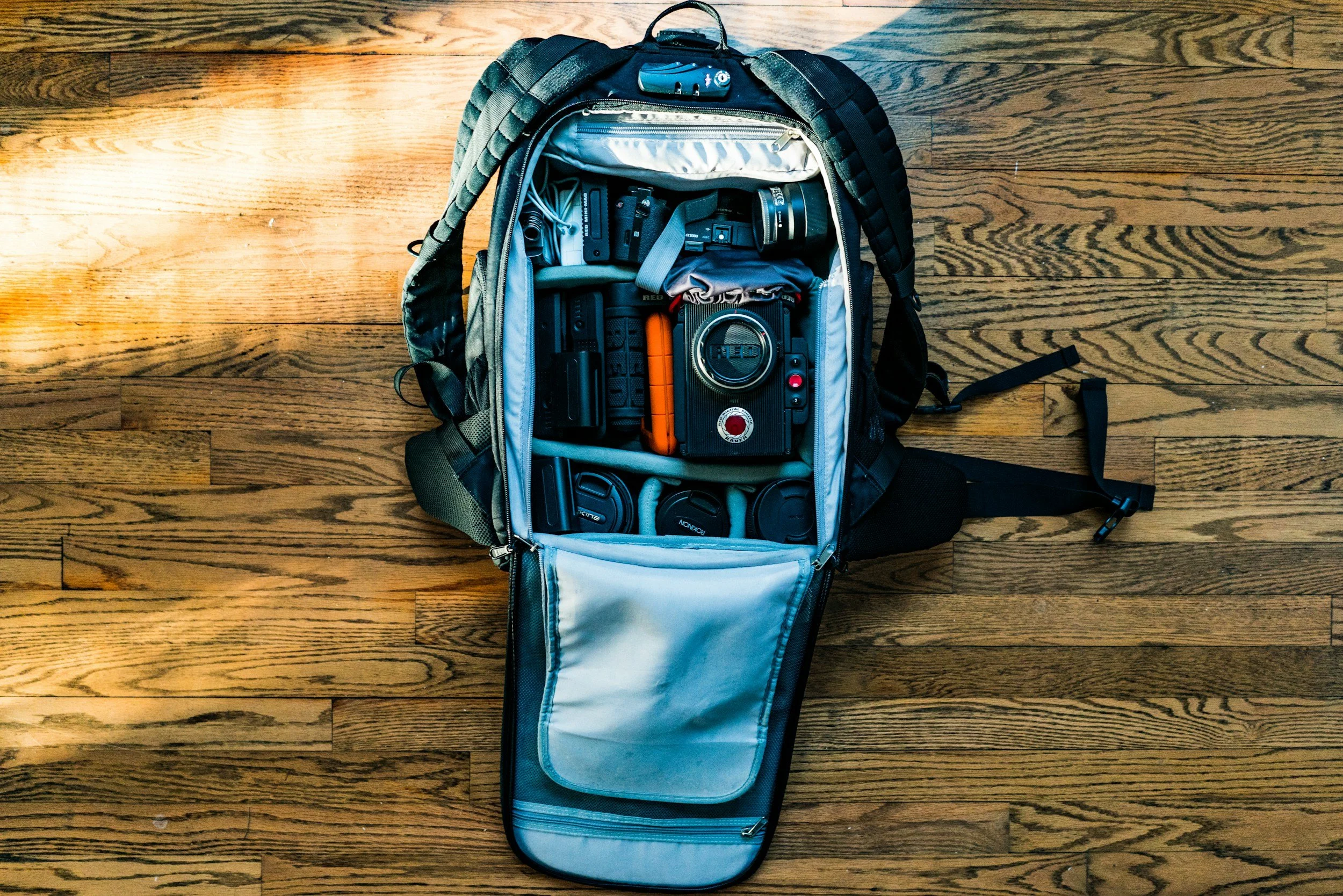
My Camera bags
Before I even get to any of the gear that I’m carrying in my camera bag, I figured it would be appropriate to talk about the camera bags themselves that I use. I have 3 camera bags that I like to use depending on where I’m going and how much gear I need to take with me. My smallest camera bag is my Peak Design Everyday Carry (yes, that’s the name of the bag). I bought this in the largest size it came in (6L) and I typically use this bag if I only need my camera and maybe one additional lens. The bag retails for $130 USD which may seem a little steep to some but the bag is made of high quality materials and feels worth the price tag. The inside of the bag consists of velcro dividers that you would find in any other camera bag, as well as an internal zipper compartment. It lives up to its name of being a great everyday carry bag.
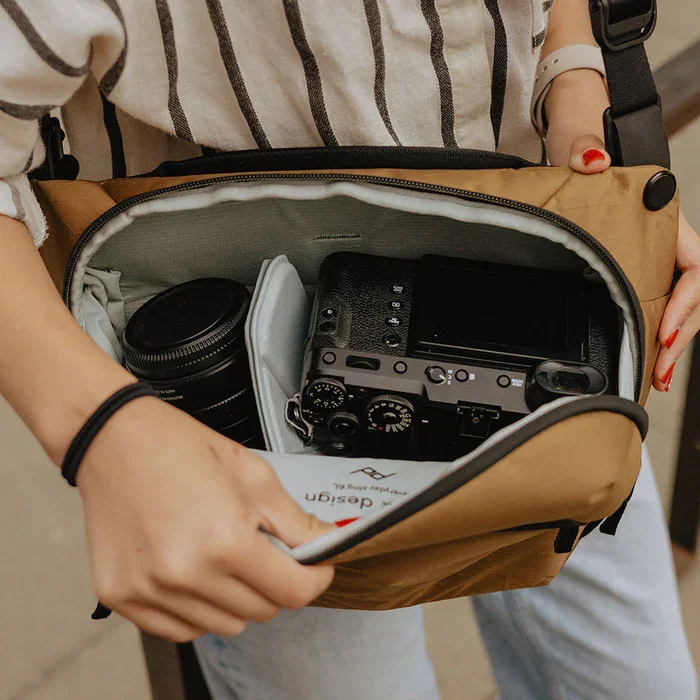
Peak Design Everyday Carry camera bag 6L - Coyote Color
My second camera bag is my mid-sized bag that goes most places with me. That bag is the Mosiso camera backpack. This is an incredibly budget friendly, but overall amazing camera bag. I have used this bag for a few years now and have yet to have any complaints about it. The bag features an outer “hard shell” with internal padding and velcro compartment dividers. Like I said, I use this for carrying pretty much all of my gear when I go out on a shoot. It retails for around $60USD for most colors and has great reviews on Amazon. I always recommend this camera bag to anyone who is looking for something bigger than an everyday carry, but not as large as my third bag.
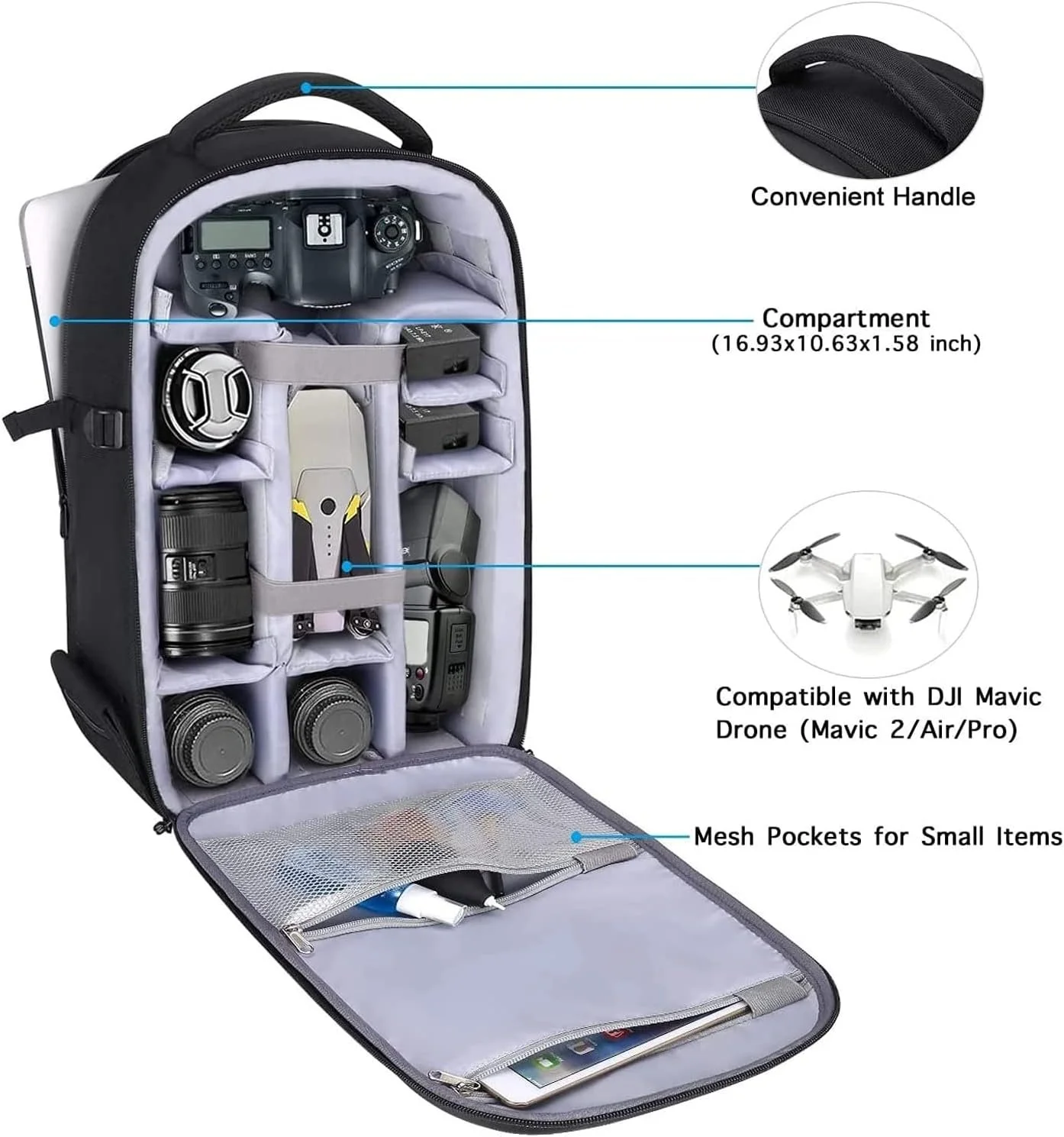
Product image of the internals of the Mosiso bag, directly from the Amazon listing
My third, and final camera bag is my largest bag, the F/64 XL Camera Backpack. I typically use this for gear storage at home, but will take it with me as an additional bag if I need to bring all of my gear with me on a shoot. I purchased this bag from B&H Photo. This is my most expensive bag but carries the largest amount of gear. I carry audio gear, video gear, my drone, and multiple cameras + lenses in this bag. The bag retails for $180 but goes on sale from time to time for less than $100. I highly recommend this bag if you’re someone who needs lots of space for gear.
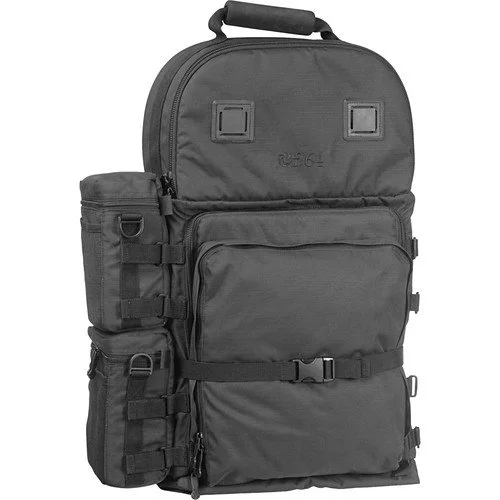
Image of the f/64 camera bag from B&H
My Cameras
Now before we even dive into this section of the article, I want to make it clear that there are going to be quite a few cameras listed here as well as a lot of gear. So this next section may be lengthy. You’ve been warned. Anyways, now with the warning out of the way, let’s dive into what cameras I am rocking in the big 2026. '
Fujifilm X-T5
My first camera, and my “primary” shooting camera is my Fujifilm X-T5. This camera is a beast packed into an APS-C body. The X-T5 features a 40MP APS-C sensor, 7-Stop In-Body Image Stabilization, and can record in 4K 60p, 6.2K 30p 4:2:2 10-Bit Video. I use this camera for both my dedicated photography sessions, as well as my street photography. If you’ve read any of my previous posts, you know I am a sucker for my Fujifilm cameras. I don’t enjoy editing photos and absolutely love having the film simulations built into the camera so I can get the look I want with minimal to no editing. When it comes to video, I use this as one of my primary video cameras as well. I shoot in D.Log and apply color corrections in post production. This camera handles it with no issues. The camera has 2 SD card slots which you can set up to shoot in duplication mode (saves a copy of each file to both SD cards), sequential mode (fills up the first card then switches to the second), or you can have it save RAW to one SD card, and JPEG to the other card. I typically shoot in duplication mode for the extra peace of mind that if one of my cards fail, the other will still contain a copy of all of my photos or videos. On top of all of the lovely tech inside the camera, I also can’t help but to deeply admire the physical look of the camera. I have the silver version, which I’ll picture below. The camera just gives that “retro” film camera style feel and I think it pairs really well with the fact that it uses film simulations.
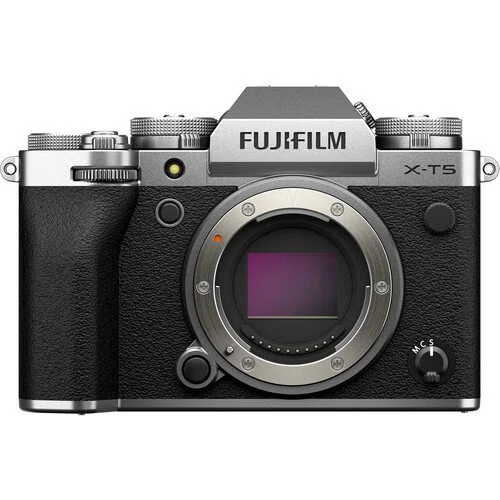
Fujifilm X-T5 (Silver)
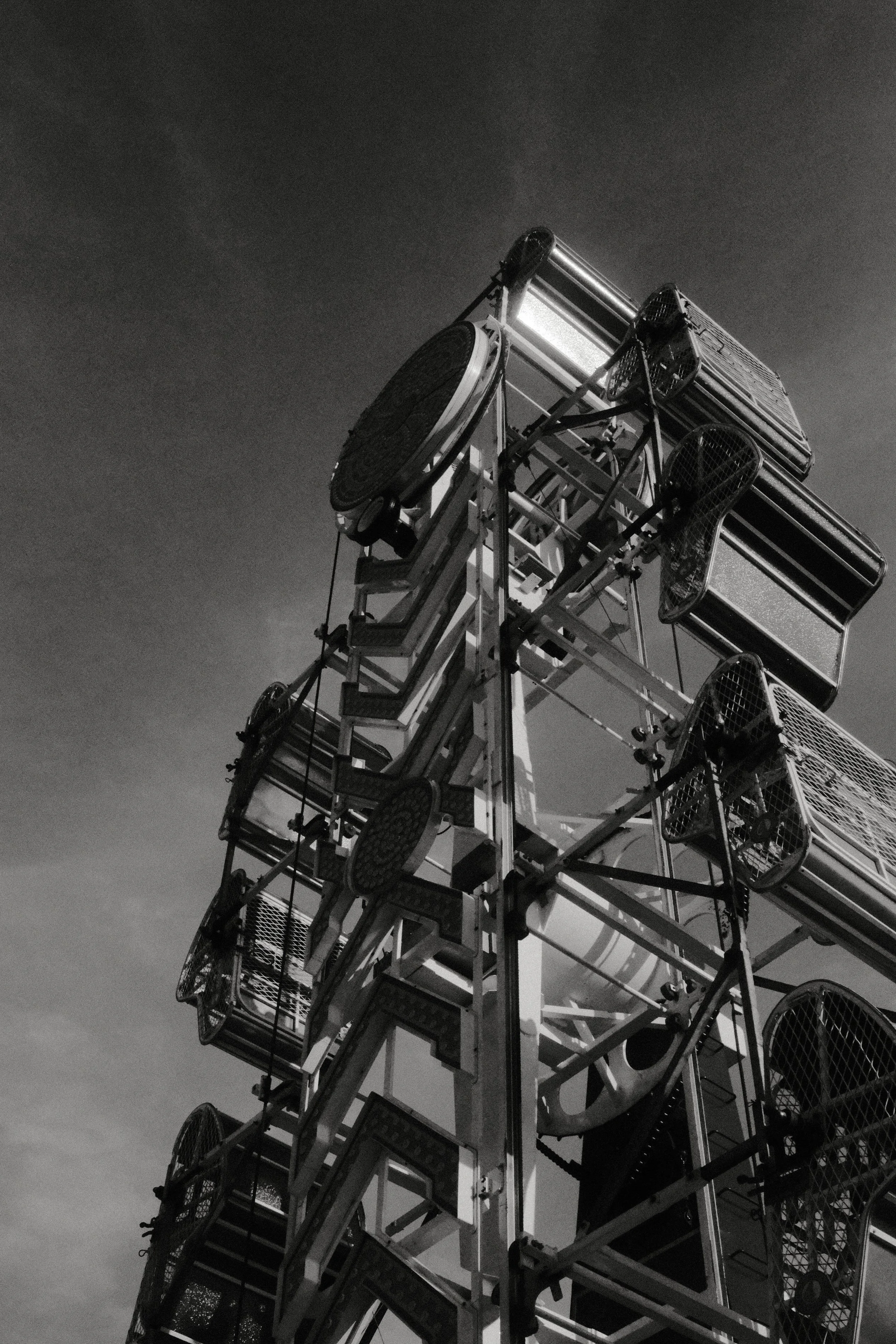
Photo taken at the Clinton County Fair - 2025 - Braydon Cottrell - Fujifilm X-T5 SOOC
Fujifilm X100V
My second camera, and one that I picked up recently from a close friend, James Ramos, is my Fujifilm X100V. Just like its big brother, the X-T5, the X100V is a beast of a camera packed into a small camera body. Since I’ve gotten this camera, I’ve found myself using it far more frequently for street photography and family events than my X-T5. It’s the perfect size to just have thrown over your shoulder or in a small bag and it’s perfect. This camera is a little older and uses an X-TRANS IV APS-C sensor. But that doesn’t stop it from performing incredibly well. Just like the X-T5, the X100V has the capability of using film simulations to change how the photograph looks straight out of the camera. The X100V doesn’t have the capability to use interchangeable lenses but instead uses a fixed 23mm f/2 lens (~35mm full frame equivalent). James was also kind enough to give me a wide-angle lens adapter that just screws on to the fixed lens to give the camera a wider field of view. This camera is so much lighter and so much smaller than the X-T5 and is truly a delight to carry around and shoot with. One of my favorite features about this camera is to change the behavior of the viewfinder with the twist of a switch. It allows you to switch it between digital, regular, or a hybrid. When using the digital viewfinder, you see through the lens and can see your film simulations and settings on a screen as you are shooting in real time. With the standard viewfinder, a little window opens up and you just look directly through the viewfinder with minimal digital features. Finally, for the hybrid, you are looking through the standard viewfinder but a little screen is projected in the corner of the viewfinder with the digital interface. It’s a really interesting feature that I’ve never seen on any other camera.
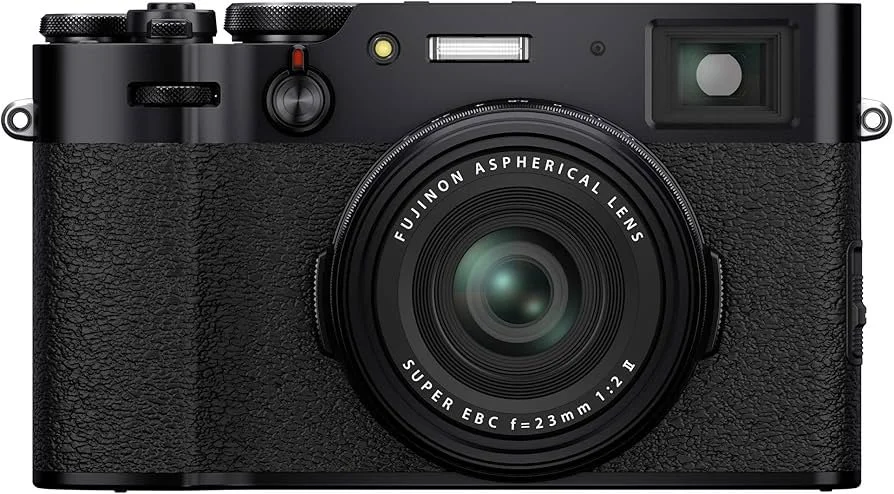
Fujifilm X100V - Black
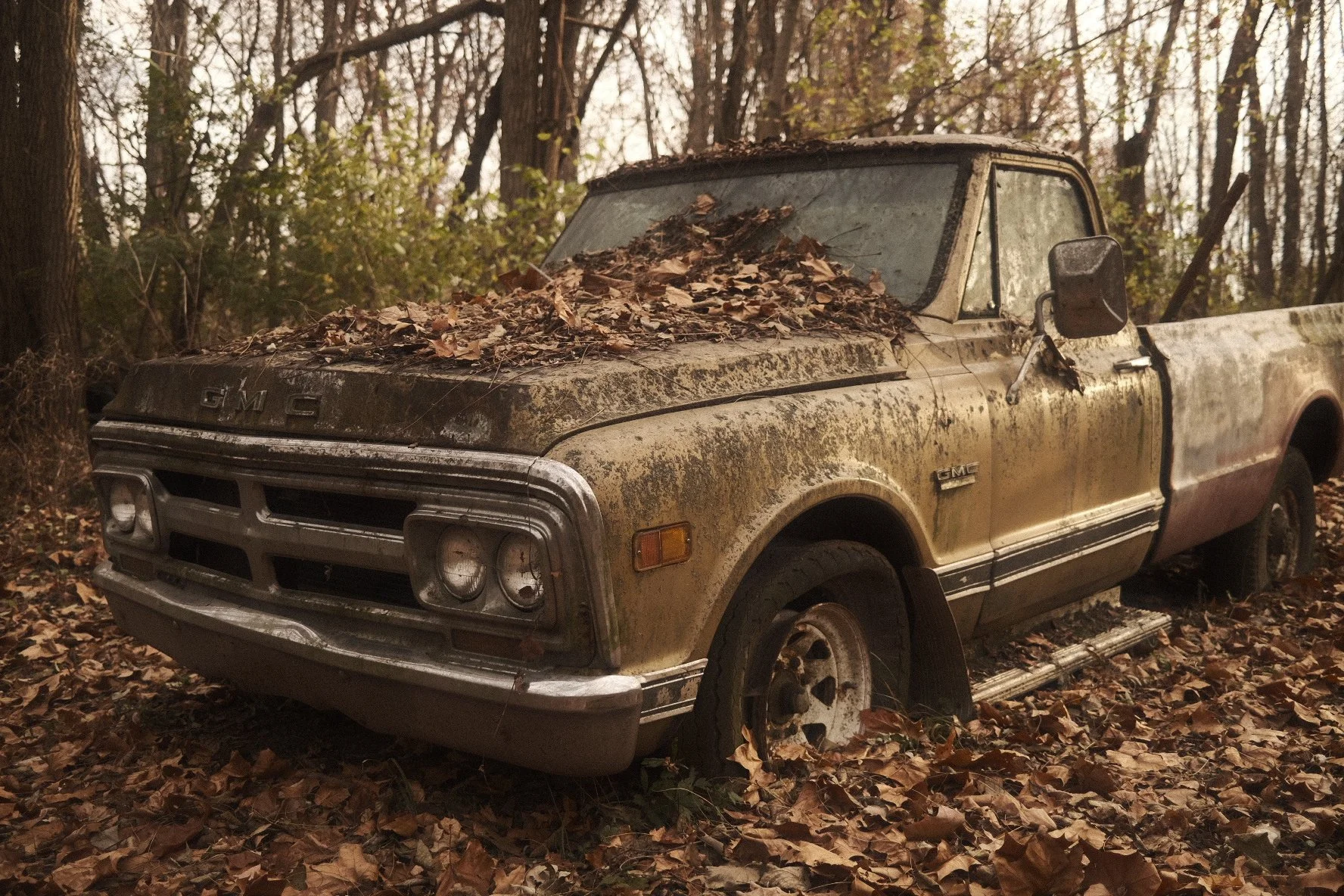
Photo taken by Braydon Cottrell - Fujifilm X100V - 2025
Lenses
Before we get into the details about my lenses, just note that all of the lenses that I use are prime lenses (meaning they don’t zoom). I personally prefer prime lenses over variable zoom lenses due to the price difference, sharpness, and wider aperture capabilities.
Viltrox 75mm f/1.2
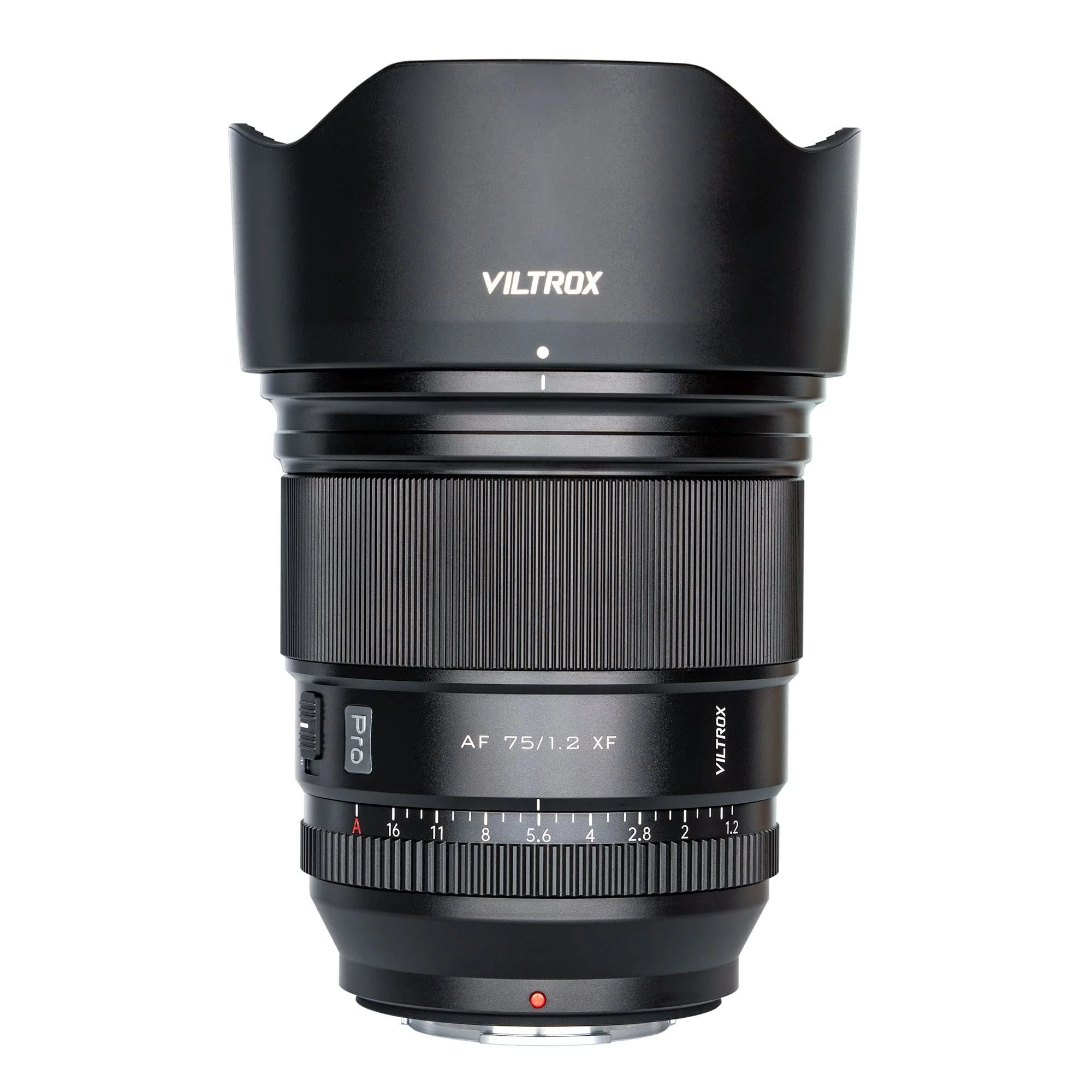
Viltrox 75mm f/1.2
Now for my lenses I have quite a few. The ones I will be listing are strictly used with my X-T5. I won’t be going into any detail about my film cameras or “action” cameras. There’s a wonderful brand called Viltrox and they make some seriously sharp lenses. Not only are the lenses super sharp, they are also incredibly budget friendly. So I’m going to start with my absolute favorite lens, and it’s the one I use for all of my portraits. That is the Viltrox 75mm f/1.2. Since these lenses are on an APS-C camera, it means that the lens have 1.5x magnification. So my 75mm is the equivalent of a 112.5mm lens. The wide aperture (f/1.2) means that I can get some really beautiful subject separation from the background. This is my go-to lens for most shoots. This lens retails for around $580 USD and is well worth the money.
Viltrox 27mm f/1.2

Viltrox 27mm f/1.2
The next lens that I love to carry in my bag is my Viltrox 27mm f/1.2. This lens has a much shorter focal length which makes it ideal for areas where you don’t have as much room to work with as you would with the 75mm. Again, with this lens on an APS-C camera, it will have a focal length that’s a little tighter than what’s listed on the lens. So, this 27mm ends up being around a 40mm equivalent on a full frame camera. Most people will argue and say that a 50mm focal length is a really sweet spot, which is why it gets the name “nifty fifty.” So shooting on this lens puts it at that nifty fifty sweet spot, which is why it’s a favorite of mine
Viltrox 13mm f/1.4

Viltrox 13mm f/1.4
The last of my Viltrox lenses is the 13mm f/1.4. I don’t use this lens hardly as much as the others but it’s not a bad lens by any means. If you’re in a situation where you really need some wide shots, like in real estate photography for example, then this lens is fantastic. If you are looking for some really unique shots, this lens is capable of handling it with no issues. I don’t have much else to say about this lens other than I don’t use it that much, but it’s still a strong lens. Again, with this lens being used on a crop sensor camera, it will be the full frame equivalent of roughly a 23mm focal length.
Fujifilm XF 35mm f/2 R WR
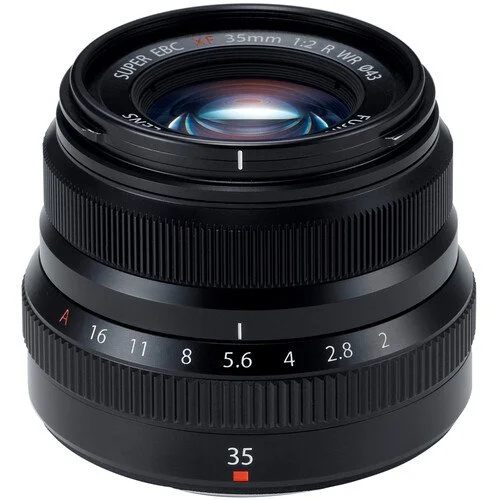
Fujifilm XF 35mm F/2 R WR
This is the last lens that I use and I always keep it in my bag. I don’t use this as much now as I used to do to mainly using my X100V for street photography, but when I feel like getting my X-T5 out and using it with a much lighter lens, this is my go-to. I picked up this lens used from Robert’s Camera in Indianapolis (which, is an incredible camera store that you should 1000% check out) for around $230 USD and it was so worth the price. Its weather sealed, incredibly light, and has a maximum aperture of f/2 which is crazy for a lens that small. This lens gets used regularly when my wife wants to take a go at the X-T5 and it’s the lens she prefers as well. If you can get your hands on one of these then you should definitely get it and don’t think twice.
For now I’m going to keep this article strictly to my camera bags, digital cameras, and the lenses. I’ll have a separate article on all of the separate accessories such as lens filters, etc.