How to shoot in manual mode
So you have your camera and you keep hearing everyone talk about manual mode. At first, manual mode can seem incredibly intimidating to beginners. But I promise, once you learn how to shoot manual, it opens up a new world of creative possibilities. It’s not as hard as you may think and I’m going to walk you through it in this article.
What is manual mode?
We can think of manual mode on a camera like we would think of manual mode on a car. In a car, manual mode means you, as the driver, are in charge of shifting gears to keep the car moving and without destroying the transmission. A camera is really similar, except you won’t be destroying your camera if you have a setting misconfigured. Manual mode on a camera is simply you, as the photographer, taking full control of the camera and its settings. On automatic modes such as program auto, aperture priority, shutter priority, etc, the camera is automatically adjusting one or more settings to achieve a proper exposure. When you put your camera in manual mode, you are telling your camera to back off and let you manually control all of the exposure settings such as ISO, shutter speed, and aperture. Your camera will still autofocus when you half press the shutter button, but that’s it.
Should you shoot in manual?
Well the answer to this is simply yes, and no. Shooting in automatic doesn’t make you a bad photographer. Some of the greatest photographers in the world all shoot on automatic. If you have a specific look you’re going for, then yes shoot in manual because the camera doesn’t know what look you want. All it is trying to do is make sure the image is properly exposed. For the example below, I used a technique called shutter drag. This is when you intentionally turn down the shutter speed on your camera and move the camera during the exposure to get this effect. This was a lower lighting situation which means my camera would’ve really cranked up the ISO to brighten the image if I shot in automatic. This was an ideal situation for manual mode because I could open up my aperture to let in more light, and turn down the shutter speed to let in even more light, which means I could keep my ISO much lower to reduce grain.
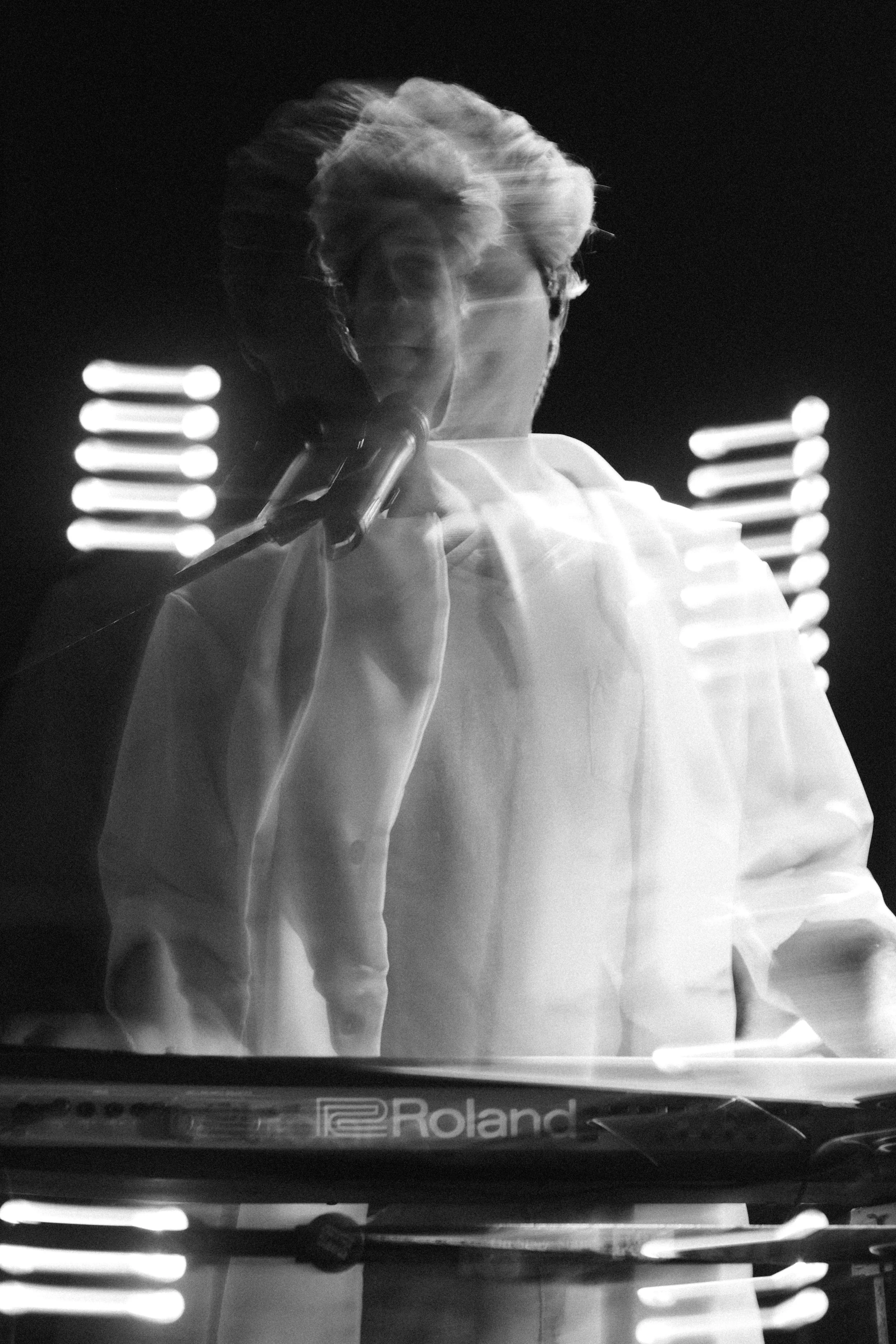
Shutter Drag Example - The Big 80’s Band - Taken by Braydon Cottrell - 2025
When you shouldn’t shoot in manual
There are certain moments in which I wouldn’t recommend that you shoot in manual mode, especially if you have never done it before. Any moment that you simply cannot afford to miss, is when I would shoot in automatic. I have seen far too many times where a beginner takes on a milestone life event such as a wedding, engagement, etc. and they decide to shoot in manual, only for all of their images to be horribly underexposed or overexposed, blurry, etc. and they don’t realize it until after the shoot. I have shot multiple important life events, and every single time I have used automatic mode. Not because I’m afraid of manual, because I’m not, but simply because I don’t want to risk missing a special moment because I was messing with my settings. It’s not worth missing those moments to boost my ego because I wanted to shoot in manual.
How do you shoot in manual?
To shoot in manual it’s quite simple but the method of getting into manual and adjusting your settings all depends on your camera. I shoot on a Fujifilm X-T5 which has dials on the top of the camera that are used to adjust the individual camera settings. All I have to do is switch the dials from “A” to whatever I want that settings value to be. Other cameras, like Sony, Nikon, and Canon will all adjust their settings differently. When I shot on a Sony A7III, I would rotate my top dial to M, and then would adjust the ISO and shutter speed within the camera software by using a dial on the back of the camera to adjust the value. Consult your camera manual or Google on how you tweak these settings with your camera. Now to get a proper exposure, you’re going to use something called the exposure triangle. At its simplest form it’s a triangle where each side represents one of the 3 components that make up an exposure. ISO, shutter speed, and aperture. By adjusting one or multiple of these settings, it will affect the outcome of your photograph. I’m not going to go into crazy detail here, but if you want to read about the exposure triangle, you can check out my other resources below where I dive deeply into each side of the exposure triangle!
Finally, the best way to learn manual mode is going to be to learn the exposure triangle and just get out there and shoot. Take a picture, tweak some settings, and see how each setting affected the photograph. Don’t be afraid of manual mode. It truly is a game changer and worth learning about! Wishing you the best as you learn about it!